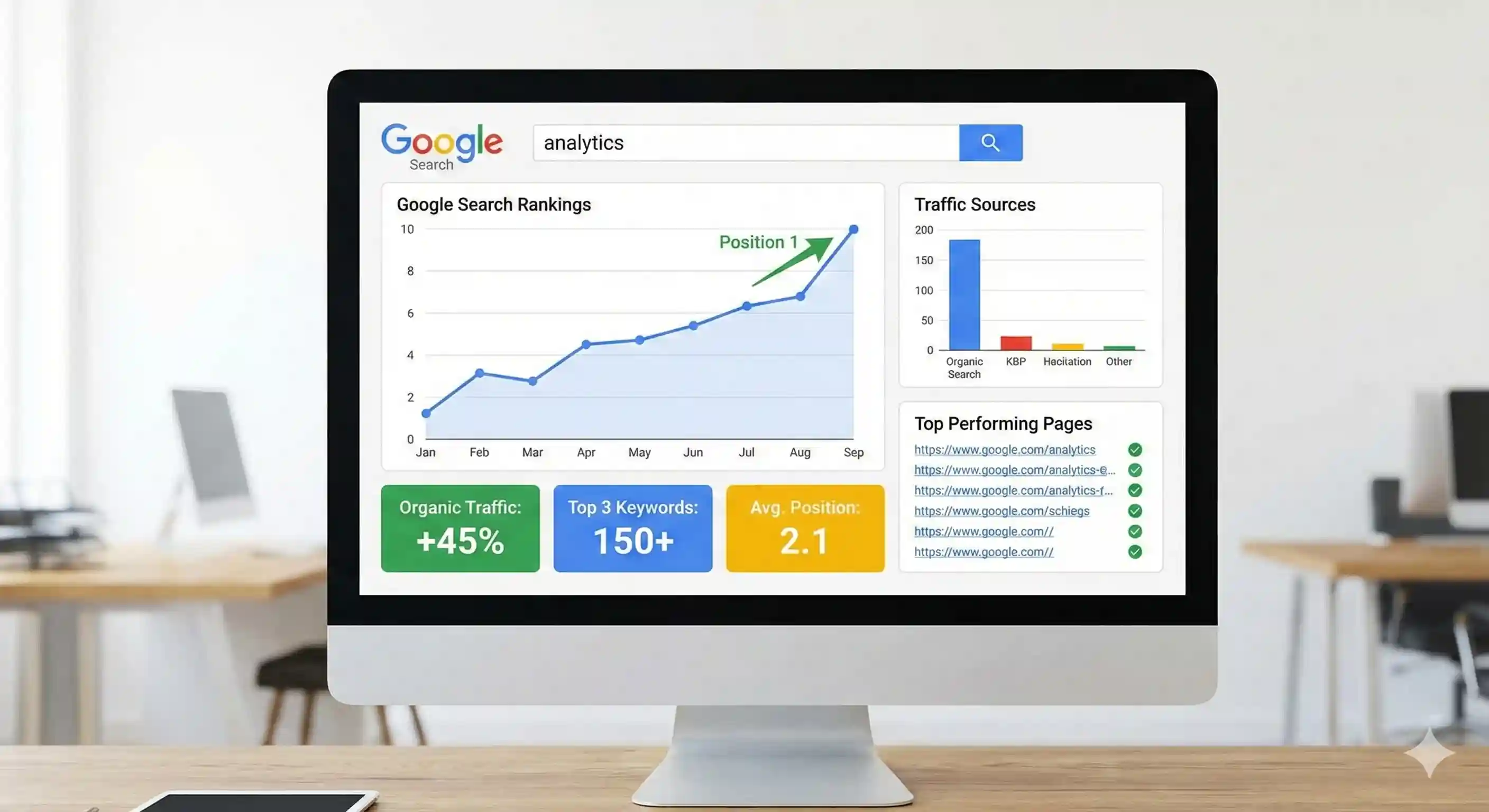
SEO used to follow a familiar formula: keyword research, content publishing, backlink building, and gradual ranking growth. In 2026, that formula no longer guarantees results. Artificial intelligence now drives how search engines interpret meaning, user intent, and contextual relevance.
Search engines do not just index pages anymore. They understand language patterns, predict behavior, and deliver answers instantly. For companies focused on growth, SEO in 2026 is about building AI-aligned systems that serve users better than competitors.
Modern search engines rely on machine learning models, natural language processing, and real-time intent analysis. Platforms like Google use AI systems to interpret context rather than relying solely on keyword signals.
Search engines now evaluate:
• Context instead of exact keyword matches
• User journeys instead of isolated queries
• Satisfaction signals instead of simple click-through rates
AI-powered features such as Search Generative Experience (SGE) and conversational search results provide users with direct answers. This shift significantly changes how traffic is distributed across websites.
Zero-click searches have increased due to AI-generated summaries, featured snippets, and instant answers appearing directly in search results.
Users now receive definitions, comparisons, and step-by-step instructions without leaving the search page. As a result, surface-level content loses traffic.
However, businesses that focus on high-intent, decision-stage content and in-depth expertise gain more qualified traffic. In 2026, traffic quality matters more than traffic volume.
Search engines evaluate why users search and whether a page satisfies that need. Pages that fail to meet user expectations lose visibility quickly.
AI models assess topic coverage, related concepts, and contextual completeness. Thin content struggles to rank, while comprehensive resources perform better.
Behavioral signals such as scroll depth, time on page, return visits, and interaction patterns influence rankings. Content usefulness directly impacts performance.
Core Web Vitals, mobile responsiveness, page speed, and accessibility are critical ranking components. Technical performance directly affects both visibility and conversion rates.
Many businesses continue using outdated tactics that no longer produce sustainable results.
Common issues include targeting high-volume but low-intent keywords, publishing generic AI-generated content, neglecting technical SEO, and separating SEO from conversion optimization strategies.
In 2026, short-term tactics fail because AI systems detect low-value content quickly.
AI can enhance SEO performance when used strategically. Businesses leverage AI tools to analyze search intent at scale, identify keyword gaps, automate audits, optimize internal linking, and improve content structure.
The strongest strategies combine AI insights with human expertise and technical precision.
SEO in 2026 intersects with product development, engineering, user experience design, brand positioning, and sales funnels.
Modern SEO requires structured site architecture, performance-driven development, conversion rate optimization (CRO), and cross-team data integration.
SEO is no longer just a content channel. It is a growth infrastructure.
Successful companies focus on intent-first keyword strategies, decision-stage content, technically optimized websites, integrated CRO, and authority-building through expertise.
Instead of chasing traffic, they build sustainable demand.
Companies must prioritize strategy over content volume, build scalable systems instead of manual processes, and align marketing with technical execution.
Key evaluation questions include:
• Are we targeting buyer-intent keywords?
• Does our website convert organic traffic efficiently?
• Are we using AI strategically rather than reactively?
KentaurX builds SEO as a performance-driven growth system. The approach integrates AI-powered analysis, technical SEO architecture, conversion-focused content strategy, automation, and continuous optimization based on business KPIs.
The objective is predictable, qualified growth rather than rankings alone.
Learn more about KentaurX SEO services
Yes. When aligned with user intent, technical performance, and conversion optimization, SEO delivers long-term and compounding ROI.
AI-assisted content can rank if it provides originality, clarity, and depth. Generic, low-value content struggles to maintain rankings.
Early improvements may appear within a few months, but sustainable growth requires a long-term strategic approach.
Both are equally critical. Strong content requires solid technical foundations to perform effectively.
No. The most effective growth strategies combine SEO, paid media, and CRO into a unified system.
SEO has evolved. It rewards expertise, performance, and user-first systems. Companies that build intelligent SEO strategies aligned with AI-driven search will generate sustainable authority and qualified leads.
Future-proof your SEO strategy with KentaurX


Whatsapp: +91 93618 97364
Email: We@kentaurx.com